Celebrate the Holidays with your Ancestors

With the holidays approaching, now is the best time to collect stories about your ancestors, collected from what you hear at family gatherings.

I lived with my grandparents when I was a child. Later in my life, I began my genealogy research to learn more about their lives and preserve their memories. I found many details and read accounts of life in Poland that could describe their childhood. After seeing these stories, I added saving my discoveries for my children and grandchildren to my goals. I decided to write a Family History containing the stories, photos, maps, and documents that would bring my ancestors back to life. I envision my family history as a significantly enhanced scrapbook, focusing on the narratives that explain their lives.

I began my research by gathering family photos, papers, and oral histories, and then expanded to census, naturalization, passenger, and marriage records. These records led me to identify their birthplace and to find additional documents in Poland.

I found accounts that described Polish life in the places where my ancestors lived. I also found vintage photos of the town, the church, and the homes. My research led to previously unknown Polish relatives who shared photos and stories, filling in more details.

As I compiled my family history, these steps started to bring my grandparents and their ancestors back to life. This process did not happen quickly or with one significant revelation. Instead, the vision of my ancestors came together, piece by piece, over many years. Eventually, I felt my ancestors looking over my shoulder as I edited their story.

Learn to ask questions even if the person is no longer available to answer. An example is their immigration story, which is an essential step in honoring our heritage. Envisioning the challenges our immigrant ancestors faced on their journey to America is a critical aspect that raises many questions. Identify the port they left from and the ship’s size. Describe the immigrants listed on the ship’s passenger manifest. How did your ancestors interact with them? How was life on board the ship? What was their destination? How long was the voyage? Link the information in the documents and find the stories.

Try to describe why they left their homes. It was not easy to emigrate. Leaving home was a very emotional decision. Those who left saw emigration as their only chance to escape a bleak life or to solve problems, such as owning land or finding a husband. Not only were they leaving their family and friends, but also their beloved homeland. Some may have been excited about emigrating, but there was also fear of the unknown. Most left home with tears in their eyes.

Try to describe their lives in America. Look through old pictures in family albums and also history books of the local area and neighborhoods. Pictures of their homes, neighborhood, and their church are vital.

Next, identify where they worked because this would have been a significant part of their lives. Finally, look at their overall experience in America. How did they enjoy their new life? Did they do anything outside of work? Identify their neighbors from census records. Did they have a hobby? Were they active in a fraternal group? Did you find pictures of family gatherings? How was their life here better than what they would have had in Poland?

We will not find answers to most of these questions. However, asking the questions and doing the research will give us a sense of what our ancestors may have experienced and help us better understand their character and our Polish Heritage.

Do not minimize the lives of our ancestors. Our immigrant ancestors were heroes, and they are the foundation of our roots in the United States. Do not underestimate their contributions. Their names will not appear in history books, but their efforts impacted American history, and without their sacrifices, our country would not have developed as it did. Their lives were the building blocks of their new country, and their immigration influenced the quality of life in the United States today. Remember that they made many sacrifices for you and helped build the United States.

Be patient. Keep asking questions and looking for records and stories. Then, please write down the stories and organize them into family histories.

Save the stories for your future generations.

Have fun, and enjoy your Heritage.

Our Polish Heritage: Ask Questions and Save the Stories

October is a terrific time for us to celebrate our Polish heritage, and the story of our immigrant ancestors is the foundation of that Heritage.

I lived with my Polish grandparents when I was a child, and later in life, I began my genealogy research because I wanted to learn more about their lives and save the memories. I found many details and read accounts of life in Poland. After finding these stories, I added saving my discoveries for my children and grandchildren to my goals. I decided to write a Family History containing the stories, photos, maps, and documents that would bring my Polish ancestors back to life. I envision my family history as a significantly enhanced scrapbook, focusing on the narratives that explain their lives.

I began my research by gathering family photos, papers, and oral histories, and then expanded to census, naturalization, passenger, and marriage records. These records led me to identify their birthplace and more documents in Poland.

I found accounts that described Polish life in the places where my ancestors lived. I also found vintage pictures of the town, church, and homes. My research led to previously unknown Polish relatives who shared photos and stories, filling in more details.

As I compiled my family history, these steps started to bring my grandparents and their ancestors back to life. This process did not happen quickly or with one significant revelation. Instead, the vision of my ancestors came together one piece at a time and over many years. Eventually, I felt my ancestors looking over my shoulder as I edited their story.

Learn to ask questions even if the person is no longer available to answer. An example is their immigration story, which is an essential step in honoring our Polish Heritage. Envisioning the challenges that our Polish immigrants faced on their journey to America is a critical aspect and brings up many questions. Identify the port they left and the size of the ship. Describe the Polish immigrants listed on the ship’s passenger manifest. How did your ancestors interact with them? How was life on board the ship? What was their destination? How long was the voyage? Link the information in the documents and find the stories.

Try to describe why they left Poland. It was not easy to emigrate. Leaving home was a very emotional decision. Those who left saw emigration as their only chance to escape a bleak life in Poland. Not only were they leaving their family and friends, but the emigrants were leaving their beloved homeland. Some may have been excited about emigrating, but there was also fear of the unknown. Most left home with tears in their eyes.

Try to describe their lives in America. Look through old pictures in family albums and also history books of the local area and neighborhoods. Pictures of their homes, neighborhood, and their church are vital.

Next, identify where they worked because this would have been a significant part of their lives. Finally, look at their overall experience in America. How did they enjoy their new life? Did they do anything outside of work? Identify their neighbors from census records. Did they have a hobby? Were they active in a fraternal group? Did you find pictures of family gatherings? How was their life here better than what they would have had in Poland?

We will not find answers to most of these questions. However, asking the questions and doing the research will give us a perspective of what our ancestors may have experienced and better understand their character and our Polish Heritage.

Do not minimize the lives of our ancestors. Our immigrant ancestors were heroes, and they are the foundation of our roots in the United States. Do not underestimate their contributions. Their names will not appear in history books, but their efforts impacted American history, and without their sacrifices, our country would not have developed as it did. Their lives were the building blocks in the growth of their new country, and their immigration influenced the quality of our lives today in the United States. Remember that they made many sacrifices for you and helped build the United States.

Be patient. Keep asking questions and looking for records and stories. Then, please write down the stories and organize them into family histories.

Save the stories for your future generations

Have fun, and enjoy your Polish Heritage.

Organizing Genealogy Information

Genealogical research typically begins with recording facts we recall about our parents, grandparents, aunts, and uncles, as well as the information found on documents at home or in the attics of our older relatives. Next, we record the family stories passed down by each generation at family gatherings.

These steps should also include collecting all the photographs associated with our ancestors, starting with our parents and grandparents. They are a snapshot of their lives at a specific time and place. They are essential to our research because they provide many clues and data that we need to include in our research.

What is the difference between Data and Information?

Collecting names, dates, documents, and photos is an essential step. However, we must distinguish between data and information while gathering and recording our research.

  • Data are raw, unprocessed facts without context. Data can be names, numbers, text, objects in photos, or any other type of input that hasn’t been analyzed or interpreted. For example, a list of dates and temperatures is data in weather reports. Another example is the names of people or the location of an event. The primary focus of genealogy forms and software is to record data.
  • Information is data someone has processed, organized, and arranged in a way that adds meaning and context to a narrative, making it useful for decision-making. The list of dates and temperatures will allow a meteorologist to give a weather forecast. In genealogy, the collection of data is clues that will help tell us more about our ancestors.

A collection of documents or an album of pictures reveals many vital aspects of genealogy and provides numerous details. Still, someone has to interpret them and explain how they relate to other family information.

Recognizing this difference was a key factor that helped me organize my research more effectively. Having my data and information organized effectively kept me from going down rabbit holes.

Information

Saving the data, documents, and pictures we find is an essential step in genealogical research. Taking an extra step to analyze the data will reveal stories of our ancestors that helped preserve their memories and provide us with clues to further our research. Therefore, compiling the information is vital and should be the focus of our organizational efforts. For example, if your goal is to identify your family’s origins, the names, dates, and place names we find on documents are data that we can analyze and organize into research notes, which will eventually help us locate our ancestors’ birthplace in the “old country.” Finding these documents gives us the information needed to tell our ancestors’ story and helps preserve their memory. Interpreting the data enables us to uncover the information and story, much like when you solve a jigsaw puzzle and find the picture.

Identifying who, what, and where, as shown in family photo albums and other documents, gives us clues. Interpreting the facts revealed in the various documents helps tell a story and may bring memories of our ancestors back to life. Revealing a story is crucial because only a few people enjoy doing the research and interpreting the documents. However, most family members enjoy reading the stories. Additionally, the stories may unlock memories in some family members and provide us with more clues that further our research. One of the tasks of a genealogist or family historian is to find a way to preserve the stories of their ancestors in a format that most family members can understand and enjoy.

Organizing the Data and Information

My initial efforts at organizing my genealogy involved using Excel spreadsheets, and then I transitioned to creating an online family tree on Ancestry.com. My next attempt was using lineage software, such as Family Tree Maker, RootsMagic, and Legacy, on my Windows PC. I tested the three software apps and chose to use Family Tree Maker. All of these tools were small steps to improve my organization. Still, none gave an acceptable result when trying to retrieve data quickly, see the overall picture, and share my results with family members.

I settled on the following steps to organize my genealogy information, which provides me with quick access to my data and allows for easy reading for my review or sharing with family members.

I began organizing my genealogy by entering the data (names and dates) into my lineage program. This step also included entering the data for their spouse and children. My next step was to set up a text document for each ancestor and save the information from the data in that ancestor’s text document, which I refer to as a summary. Using the storytelling or narrative tool in my lineage software app helped me begin this step.

I used summaries as my primary research and organizing tool, referring to them when I needed facts to conduct further research. I also updated them conscientiously when I found new information. Having all the information for an individual in one place was another benefit of the summary, as it helps me find data more quickly for further research. Moreover, I listed the information in chronological order, which aided in analyzing and interpreting the facts to unravel my ancestor’s story.

Summarizing information is a valuable tool for organizing genealogy research. It consolidates all the information for an individual in one place, becoming a Quick Reference Sheet. The method focuses on saving the information rather than the documents. Remember, the records contain the data, but it is crucial to convert that data into information that will hopefully expand my genealogy research.

Documents provide the data that leads to information.

Organize the Information so you can see the stories.

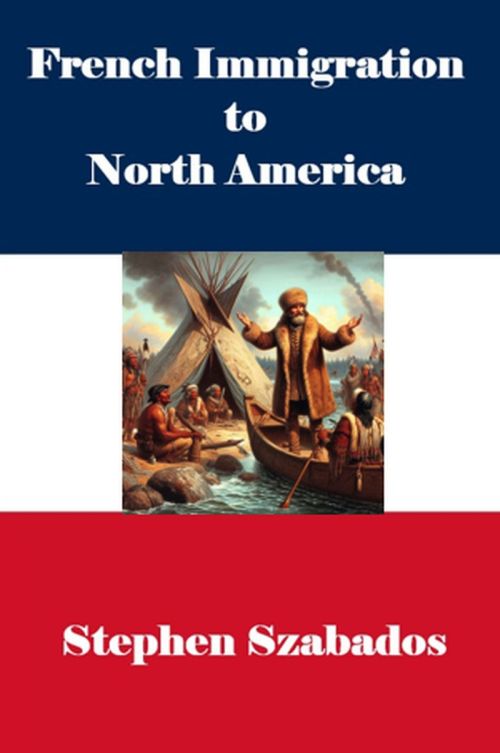
New Book, French Immigration to North America

My new book, French Immigration to North America, is now available at Amazon as a print book and eBook at Kindle, Apple, Barnes & Noble, and Kobo. It is also available as an eBook at many libraries through Hoopla.

Description

This is a fantastic resource and a must-have when writing your French family history. When did your ancestors immigrate, where did they leave, why did they leave, and how did they get here? The author hopes you find the answer to some of these questions. The book will give insight into the immigration of your ancestors. They played a critical role in the growth of North America. Do not underestimate their contributions!  Find their stories!

Did Your Grandfather Work for the Railroad?

Finding my grandfather’s railroad pension papers gave me exciting details of his life to add to his narrative, such as work and wage history. As a bonus, I was thrilled to know he worked for the railroad because the little boy in me was fascinated with trains.

Most employment records should give you exciting information about your ancestors. Unfortunately, finding their employment records is rare due to privacy concerns and the destruction of files after the closing or merger of businesses. Railroad records are the exception.

Fortunately, many historical groups have saved the files of defunct railroads, with the Railroad Retirement Board (RRB) being the largest resource of personal papers of railroad workers. In the 1930s, Congressional legislation established the RRB to protect and administer the pensions of all railroad employees for all companies. Their files include the employee’s pension applications, numerous papers concerning service dates, and, sometimes, a listing of their monthly wages. The files may also include marriage and insurance information.

Knowing my grandfather’s monthly wages told me about his loss of work during the 1922 railroad strike. His wage history during the depression indicated he lost few work hours and got wage increases. He did well and could afford to purchase a luxury car in 1938. The papers also pinpointed the start of his health problems in 1949 and his disability pension in 1950. These documents were a treasure trove of information that added rich detail to his family history.

Access to the files for retirees falls into three stages. First, the RRB holds the files for those receiving pensions. Then, after the person dies, the board keeps their file for seven years. Lastly, after this waiting period, the board sends the inactive files to the National Archives. Use the webpage https://www.archives.gov/atlanta/public/railroad-retirement-board-records to obtain copies of the inactive files for your ancestors.

Ancestry.com has a searchable index, U.S., Railroad Retirement Pension Index, 1934-1987, based on the RBB files at the National archive. Unfortunately, the database does not offer images of the records. Additionally, my experience indicates the database is incomplete.

Other Employee Records at Ancestry.com
Ancestry.com has other railroad-related and non-railroad-related employment databases. Similar to the RRB files, they should add rich details to your family history if you find your ancestor in the files.

U.S. employment databases on Ancestry.com
• U.S., Chicago and North Western Railroad Employment Records, 1935-1970
• Utah, U.S., Select Union Pacific Railroad Personnel Records, 1890-1965
• California, U.S., Railroad Employment Records, 1862-1950
• Wisconsin, U.S., Employment Records, 1903-1988
• New York, U.S., State Employment Cards and Peddlers’ Licenses, 1840-1966
• U.S., Panama Canal Zone, Employment Records and Sailing lists, 1884-1937
• Colorado, Steelworks Employment Records, 1887-1979
• Brooklyn, New York, U.S., Bethlehem Steel Shipyard Employment Cards, 1908-1965
• Pennsylvania, U.S., Coal Employment Records, 1900-1954

Non-U.S. employment databases on Ancestry.com
• UK and Ireland, Commissioners’ Report of Children’s Employment, 1842
• The U.K., Railway Employment Records, 1833-1956
• Canada, Rideau Canal Rents, Property and Employment Correspondence, 1826-1855
• Tasmania, Australia, Teacher Employment History Cards, 1886-1945
• Tasmania, Australia, Railway Employment Records, 1903-1977
• New South Wales, Australia, Registers of Police Employment, 1847-1885

Pullman-Standard Employment Records
Another exciting resource for railroad-related employment records is those of former employees of the Pullman-Standard Corporation. Pullman was the leading producer of railroad passenger cars in the early 1900s and also employed the porters who serviced these specialty cars. Pullman-Standard hired thousands of workers from Northwest Indiana and Chicago at their Hammond, Michigan City, and Chicago locations. Since employees routinely transferred within the Pullman-Standard plants in Indiana and Illinois, you may find information on a particular employee in the files of both sites.

Chicago Works
The South Suburban Genealogical Society (SSGS) in Crestwood, Illinois, somehow saved the personnel files for the employees from the now-closed Pullman Standard Car Works plant in Pullman, Illinois (now part of Chicago). The group found the documents in a wood kiln in Hammond, Indiana, waiting for destruction.

There are approximately 200,000 individuals in the SSGS collection, and each person’s packet is different. Among the files are birth certificates, military documents, pictures, work histories, education records, and death certificates. Between January 1983 and 1989, SSGS used over 2,560 volunteer hours to alphabetize, clean, re-box, and index more than a million documents previously kept in numerical order. Unfortunately, there are no plans to digitize the files, which contain many delicate original copies.

Their research library is at 3000 W. 170th Place, Hazel Crest, Illinois. However, the society does not allow family researchers to browse the files, which are very fragile in some cases. SSGS staff will search the Pullman files at no charge to find if your ancestor is in the records, but there is a fee if you order a copy. You can contact SSGHS using their email, info@ssghs.org, or phone at (708) 335-3340 to request a search.

Indiana Plants
The Indiana Regional Archives at Calumet holds the employee records for the defunct Pullman Car Works in Hammond, Indiana. Volunteers from the Northwest Indiana Genealogical Society cataloged these records and made a searchable index available on the NWIGS website, http://www.rootsweb.ancestry.com/~innwigs/, using their Online Archives or Research Resources page.

Service Personnel
The Newberry Library in Chicago holds the files of the Pullman car service employees, such as Porters and other staff. Contact the reference librarians at (312) 255-3512 (leave a message) or email your request using their webform at https://www.newberry.org/contact-librarian.

I was lucky to find the rich details of my grandfather’s employment. Even if you initially can not find similar information for your ancestors, don’t give up. Continue searching the local library collections, genealogy society, and historical society where your ancestors lived. You may not be successful, but you will not know until you try. Finding them may unlock some magic.

The Descendants of Thomas McDowell in Colonial America

This book is the story of the descendants of Thomas McDowell, who came to the American colonies in the 1700s, and their impact on American History. The different branches lived in Pennsylvania, Delaware, Virginia, North Carolina, and Kentucky, and many family members made significant contributions to the growth of the colonies.

The new homes of the McDowell Family were on the frontier. Life there was challenging as they had to clear their land and build cabins. They also joined the local militias to protect themselves against Indian attacks. Even though Indians killed some, most survived and, in many cases, flourished.

The McDowell family had many members who fought in the American Revolution to establish our freedoms. Did you know Charles McDowell, “Pleasant Garden Joe” McDowell, and “Quaker Meadows Joe” McDowell were officers in the North Carolina Militia who had a significant role in defeating the British at a turning point in the American Revolution. They are in history books.

The McDowell family’s contribution to American History goes beyond our three heroes in the North Carolina militia. Read the pages of this book to discover who the other heroes are. One may be your ancestor.

The book offers a fascinating overview of colonial American life. Even if you don’t have McDowell ancestors, you may find a connection to your colonial roots.

Research Trips: Cemeteries, Libraries, and Archives

Using the internet is a great way to start your research, but eventually, you will have to plan a research trip to get more information. You may be able to get some non-internet information through phone calls, letters, and emails. Eventually, you will need to do a genealogy-related trip for in-person research because you have too many questions, and the research may be too complicated to do it remotely. Additionally, wherever you go, you need to prepare very carefully to have a successful trip.

I suggest your first trip should be near where you live. Also, your first trip should have a small, simple to-do list. The location could be a cemetery, a local genealogy archive, or just visiting the neighborhood where your ancestors lived. Your research could be to record tombstone inscriptions, search for copies of obituaries, or take pictures of the homes and neighborhoods. These straightforward trips will help you develop your organizational skills for longer and more complicated trips. Furthermore, learn to photograph grave markers and take tombstone rubbings at a nearby cemetery. The time to learn is not at a cemetery many miles from home on the last day of your journey, with a storm approaching.

Where to go:
Cemeteries

Gather your information by recording inscriptions on grave markers, looking at nearby graves for other relatives or family and friends, and taking pictures.

Local Libraries and Historical Museums
Some local libraries and historical museums go beyond having genealogy books on their shelves. Look for older copies of the local newspapers, school yearbooks, ring binders holding stories of local history (people, buildings, and events), and a collection of historical photos of buildings and people that relate to your family history.

Genealogy Societies
Many local genealogy societies have worked hard to build collections of documents and information that pertain to their location. Their files are excellent sources for hard-to-find birth, marriage, and death records, family bibles, family histories, county histories, cemetery records, obituaries, and many more. Most societies have websites that list their collections and contact information. You may be able to answer some of your questions by email or phone, but if your list is long, you should plan to visit their archive for help.

County Offices
The county recorder is the place to find real estate and transactions for your ancestors. You must do this research in person or hire someone to do it. The county recorder or health department holds copies of birth, marriage, and death certificates, but you can usually order copies of these documents by mail, phone, or their website.

Other resources
The following are other resources that hold documents that you may need but are not online. Check their websites to see if they accept phone or email requests. However, if your list is long, you must do the research in person.
• Historical Battlefields
• Regional Libraries
• State Archives
• Regional National Archives

Avoid frustration and increase your research time by carefully planning your research trips:

  1. Determine what records are available at the location of your trip. Email or call to make sure they have what you need. Make sure you visit the correct location, i.e., county borders may have changed, and your records may be at another courthouse. If your trip is a long distance from your home, double-check for alternate sources close to home.
  2. Know What You Want. It is imperative to have a research plan so that you stay focused. Make a list of the issues you need to research at the location. Your lists should include:
    • specific facts you want to prove or disprove
    • records you need to find for particular people
    • what documents do you want to browse to see if they mention your ancestors
    • make a list of questions you need to ask at the location
  3. Make sure the location is open the day you plan to be there. Make another phone call one to two weeks before your visit to make sure their schedule has not changed. Also, ask if there are any special instructions for finding the facility and convenient parking. Also, ask if they have a cafeteria, lunchroom, or nearby restaurants. For cemetery visits, obtain a map of the cemetery and the location of your ancestor’s gravesite before your visit, or make sure the office is open the day of your visit.
  4. Learn the Procedures of the Location. You should learn the rules and restrictions on research at the library or archive, such as the use of cameras, laptops, and portable scanners. Are pens allowed, or are only pencils used? Is a wireless connection available? Is the access to the records closed stack or open stack? Are copy machines in open areas, or are staff only allowed to copy documents? Make sure the documents are at the library and not in off-site storage.
  5. Get your Files and Tools Organized for the Trip. Taking the right stuff on your trip is essential. As part of your planning, it will be helpful to make lots of lists;
    • Notes you have for the people targeted on the trip
    • List of questions and issues for your targeted people
    • Maps, directions, and contact information
    • Always remember to take a magnifying glass to help in reading old records.
    • Copies of family trees or access to your family trees
    • Take copies of documents with you and leave your original documents behind. No one will probably steal them, but forgetting them somewhere is a definite possibility.

Other things to pack for a research trip
• Laptop computer or tablet – If you have one, take it on your trip, even if it is not allowed in the research facility. It is a great communication tool, and Wifi connections are available at most hotels and coffee shops.
• Thumb drives or flask drives to download copies of documents using the computers at the facility.
• Cell Phone – Never leave for a trip without your cell phone. This is essential for communicating on your trip and also using the map app on your phone.
• Camera – Even if cameras are not allowed in the research facility, use your camera to record your trip. You can also use your smartphone.
• Suitable clothing – Look at the weather forecast and be prepared for the worst.
• Umbrella – Again, always be prepared for changes in the weather.
• Snacks – You will need extra energy.
• If visiting cemeteries, take tools to clean around the edges of the grave markers.

Research trips should be fun. Preparing for it helps make your success possible.

Christmas Presents for a Polish Genealogist

Do you need a Christmas gift list for the family genealogist? You may want to consider genealogy-related books, a subscription to a genealogy database, or a DNA test kit.

Books are great gifts. There are many sources for Polish genealogy books on the Internet, but I suggest starting your search with Polish-related webpages such as PGSA.org, the Polish American Journal bookstore, and the Polish Art Center. Here are some books that I found helpful.

Books on Research and Translation
• Polish Genealogy: Finding the Polish Records by Stephen Szabados (2023) – The book outlines a simple process that will help identify where your ancestors were born and where to find their Polish records.
• In Their Words: A Genealogist’s Translation Guide to Polish, German, Latin, and Russian documents (4 books (2003, 2007, 2013, 2017) – each covering a different language) by Jonathan D. Shea and William F. Hoffman – Four separate books covering the languages found in Polish records. The books discuss documents and extracts from American and European sources, as well as a glossary of genealogy terms to help translate the documents.
• Going Home – A Guide to Polish American Family Research by Jonathan D. Shea (2008) – Another great guide discussing where to find U.S. and Polish records for your ancestors.
• The Study of Obituaries as A Source for Polish Genealogical Research by Thomas E. Golembiewski (2009) – This book provides information on deciphering and using Polish language obituaries.
• Haller’s Polish Army in France by Paul S Valasek (2006) – An excellent reference for information if your ancestor was part of the Polish Army in France, aka Haller’s Army, aka the Blue Army (only available on eBay).
• Slownik Geograficzny by Filip Sulimierski, Bronisław Chlebowski, Władysław Walewski, and others, Warsaw, multiple volumes published between 1880 and 1902 – available on DVD from Polish Genealogical Society of America (PGSA.org)
• A Translation Guide to 19th-century Polish-Language Civil Registration Documents: including birth, marriage, and death records by Judith R. Frazin. Great translation guide for Polish records found in the Russian Partition.
• First Names of the Polish Commonwealth: Origins & Meanings by William F. Hoffman and George Wiesław Helon (1998) – This is an excellent reference to decipher the correct first name for your ancestors.
• Polish Surnames: Origins and Meanings by William F. Hoffman (2012) – This is a must-have reference to determine the proper Polish surname for ancestors.

Books on History, Culture, and Customs
• Polish Immigration to America by Stephen Szabados (2016) – This book gives excellent insights into the emigration and arrival in America. A must-read for the family historian.
• Daily Life in Immigrant America 1820-1870 by James M. Bergquist(2019) – This book will give us great insights into the lives of our ancestors who arrived in the 1800s.
• Daily Life in Immigrant America 1870-1920 by June Granatir Alexander (2009) – This book will give us great insights into the lives of our ancestors who arrived in the late 1800s and early 1900s.
• Jadwiga’s Crossing: A Story of the Great Migration by Aloysius A. Lutz, Richard J. Lutz (2006) – Must read to gain insights into the challenges of crossing the Atlantic on a sailing ship in the 1800s. It will change your perspective of your ancestors.
• God’s Playground: A History of Poland: In Two Volumes by Norman Davies (2005) – Best and most accurate Polish history book.
• Polish Customs, Traditions, and Folklore by Sophie Hodorowicz Knab (1996) – Must have to learn more about your Polish heritage.
• Forgotten Doors, The Other Ports of Entry to the United States edited by M. Mark Stolarik (1988) – Not all immigrants arrived through New York. This book covers the history and describes coming through the other major U.S. ports.

Subscriptions
• Ancestry.com – One of the premier resources for U.S. records.
• MyHeritage.com – Their databases may overlap with other resources, but Europeans tend to use their family trees and DNA databases. I have found multiple 2nd cousins using MyHeritage who have shared information and helped extend my family history.
• Newspapers.com – one of the largest collections of searchable newspapers. Check their inventory to ensure it includes newspapers from the areas where your ancestors lived.

DNA Test Kits
Are you contemplating buying a DNA test kit for yourself or a family member as a Christmas gift? However, before purchasing a test, it would help if you answered a few questions about how the results can be helpful and whether you are ready for the type and limitations of information it shows.

The test results give two types of information. The first set is a list of diagrams showing the possible areas their ancestors left, implying these are your roots! The second data set is a list that matches your DNA to other submitted samples. This set gives a range of relationships, such as 2nd to 4th cousins, 3rd to 5th, and more. Promotional ads suggest that the test results magically produce a complete family tree and point to a location on a map. Unfortunately, this magic does not happen. The DNA test results will only give clues, not the solution to your questions. Detailed research and analysis are required to finish the job. Have you done any research, or are you ready to start?

DNA testing is not magic. It is a science and a tool that may give you clues to your family history. Genealogy research also is not magic. It is detective work where you need to apply sound and detailed research to be successful. You will have to commit to many days and nights of work uncovering your family history. Please don’t jump into DNA testing without knowing why you are doing it. It can lead to fantastic information, or it may be a waste of your money.

Your genealogist should love all of the above suggestions. However, be prepared! Genealogy may be considered a hobby, but for many, it is a fun addiction. Listen to the stories and have fun with them.

Wesołych Świąt

What is the difference between Data and Information?

A pile of documents or an album of pictures depicts many aspects of genealogy, but someone has to interpret them and explain how they relate to other family information.

  • Data are raw, unprocessed facts without context. Data can be names, numbers, text, objects in photos, or any other type of input that hasn’t been analyzed or interpreted. For example, a list of dates and temperatures is data in weather reports. Another example is the names of people and the location of the event.
  • Information is data that has been processed, organized, and arranged in a way that adds meaning and context to a narrative, making it useful for decision-making. In genealogy, it tells us more about our ancestors.

Converting the data into information is crucial to success, no matter what your goals are. If your goal is to identify your family’s origins, the names, dates, and place names we find on documents are data that we can interpret and organize into the research notes that eventually will help us find our ancestors’ birthplace in the “old country.” Finding these documents gives us the information needed to tell our ancestor’s story and helps preserve their memory.

Benefits of Organizing Your Genealogy Research

So you want to research your family history. What do you already know about your ancestors? What documents do you have? Why do you want to do this research? What is your goal?

Whatever you have to start, organizing your efforts and results is a critical tool in successful genealogical research.  Being systematic is vital for several reasons:

  1. Efficiency:

When you organize your research and workplace, you can quickly find the information you need. This efficiency saves time and prevents frustration during the research process.

If you are disorganized,  you may misplace something and lose time and frustration searching for it. You can better spend this lost time searching for more information, evaluating what you find, and many more genealogy or family activities. Worse,  you may spend money to replace what you misplaced, which is money you can not use to pay for books, conferences, trips, or updating your computers and software.

  • Clarity:

Being organized helps you find your desired results effectively. Organized research allows you to trust the information you’ve gathered. When you have facts at your fingertips, it is easier to enter accurate criteria in your searches. It enables you to do precise and complete research. It minimizes the time you spend going down rabbit holes chasing false information.

Additionally, when you are organized, other people find it easier to work with you. Answering questions and extracting documents from your files effectively gives the impression of a knowledgeable genealogist and earns respect from the other person. Working with an organized researcher can be a pleasure. If you provide an incomplete answer and can not find your documentation, other researchers may ask themselves if they want to work with you.

  • Better Decision-Making:

Clutter and disorganization can impair your ability to focus and make decisions accurately. You may feel overwhelmed. The experience increases your stress level, which hurts your productivity and decision-making ability.

Organizing puts you back in control. You’ll know where to find relevant materials, making the entire process more manageable. It reduces the time spent chasing false clues. If you are calm and organized,  you can think more clearly, make better decisions, and do better work. You can enjoy your genealogy work.

Also, remember that organizing your research goes beyond setting up a filing system. To be organized, consider the following:

  1. Set a goal
  2. It is why you are doing your research.
  3. It may change, but you need a direction to get started.
  4. It helps you to stay focussed.
  • Carefully choose the information you save
  • It is crucial to know the difference between documents and information
  • It is essential to see the information that helps your ancestor’s story to emerge
  • It is imperative not to clutter your files with documents for non-family members unless they add to your goals.
  • Plan on sharing your research with your family
  • Sharing may get you more information from family members as they remember
  • Making sure your family understands what you show them will help your research
  • Ensuring you organize your genealogy files increases the odds that your family will keep them and not throw them out as a bunch of old papers

So, start organizing early to reap the benefits. Whatever your goals are, do the work, organize the information, and save what you find for future generations. Design your organizational plan to fit your goals, skills, and space. Get it organized so it’s worth saving.

Remember, your research can create something valuable for you and your family.